
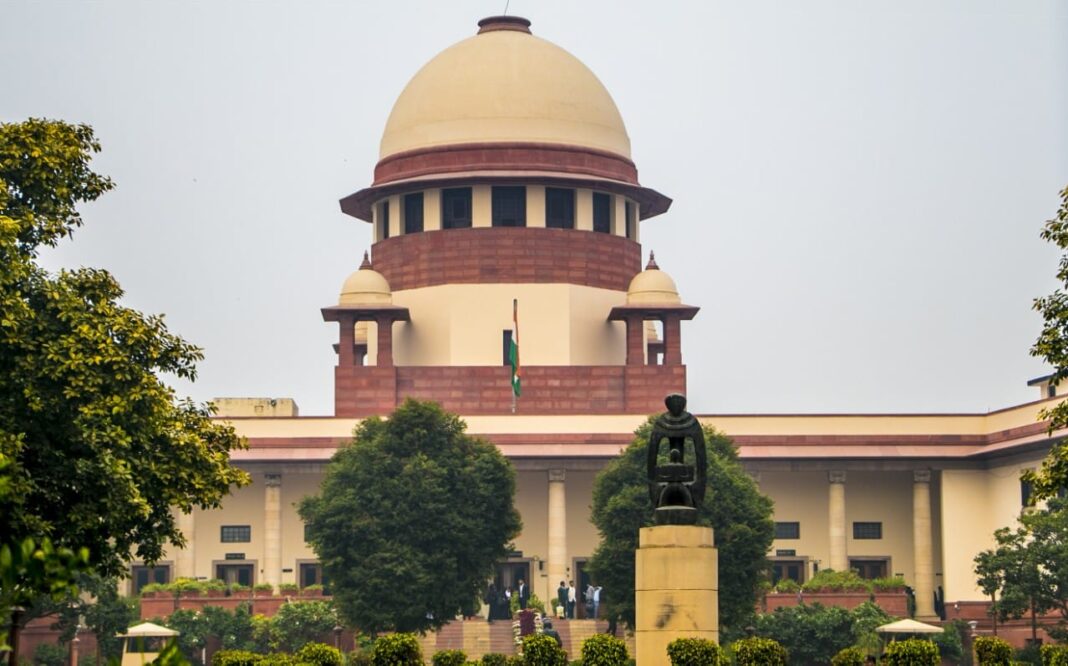
Supreme Court did a landmark ruling on Waqf Amendment Act, 2025. The Supreme Court on Monday refused to stay the Waqf(Amendment)Act,2025,provision requiring registration of Waqf by user, but the court has paused the clause that states a person must be a practitioner of Islam for five years , next is nominating non-Muslim individuals and state waqf boards. The third provision empowering district collectors to decide whether a property claimed as Waqf actually belongs to the government was stayed.
The Court imposed limits on the number of non-muslim members in the Central Waqf Council and State Waqf Boards pending a fuller debate and rule framing. Despite these suspensions , the court upheld many of the other acts provisions and emphasised the principle of presumption of constitutionality-that state passes by Parliament are presumed valid unless shown otherwise. The Court held that only in “rarest of rare” cases will it suspend or strike down a law its entirely.
The petitions filed against the Amendment Act argued that the challenged provisions violate several articles of the Indian Constitution which includes Article-14 which is equality before law and Article 15(Prohibition Of discrimination),because requirements such as the “the five years practising Islam”might discriminate even within the Muslim community. Article 25 and 26(Freedom of religion, rights of religious denominations), specially concerning who can create a Waqf and who manages it. Article 21(protection of life and liberty)and Article 300-A(right to property)among others,as property rights and religious rights are involved in how waqfs are created and managed.
The decision doesn’t not settle all controversies, but it has immediate and far reaching implications. For one, potential donors are temporarily relieved of the fear that their donations might be invalidated under the “five-year practising Islam” rule . It also restrains executive preserving judicial oversight.
In the longer term, states will have to frame rules to operationalise or define certain terms(like”practising Islam for five years”)in a manner compliant with constitutional guarantees. Court judgements to follow will decide if the remaining provisions of the Amendment Act survive constitutional scrutiny . The case remains pending final decision .


Act,2025 addressing challenges to its constitutionality . A bench led by Chief Justice B.R Gavai and Justice A.G. Masih refused to stay the act entirely but suspended key provisions. The case remains under judicial review for a final verdict .)