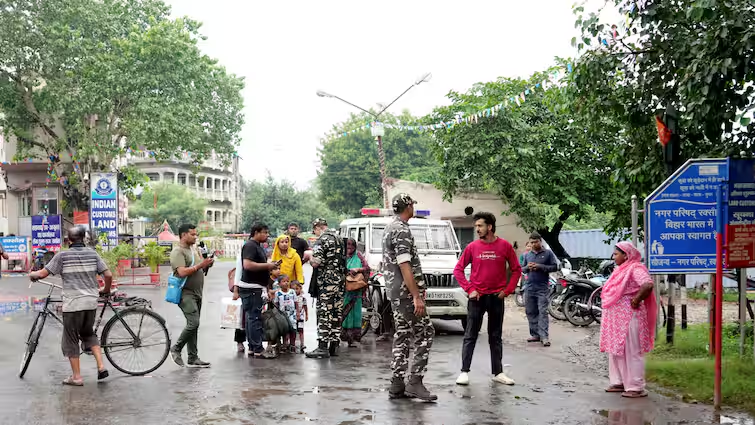
The Sashastra Seema Bal (SSB) has intensified security along the 1,751-km-long unfenced Indo-Nepal border following the escalation of violent protests in Nepal. The unrest, initially triggered by a government-imposed social media ban, has now turned into a wider agitation demanding accountability, anti-corruption measures, and better governance. At least 19 people have died and more than 300 have been injured in the ongoing violence.
Security Measures at the Border
To prevent the spillover of unrest into India, the SSB has deployed additional forces at 22 border posts, particularly in districts such as Balrampur. Surveillance has been tightened with the use of drones, while police and SSB jawans are conducting joint patrols under “Operation Kavach.” Strict checks have been enforced, allowing cross-border movement only with valid identification. All field commanders have been directed to remain on the ground to ensure heightened vigilance, and intelligence agencies are closely monitoring developments.
Impact on Movement and Trade
The disturbances in Nepal have already impacted border trade and travel. At the Panitanki border crossing in West Bengal, movement has come to a standstill, leaving hundreds of trucks stranded on the Indian side. Over 100 Indian truck drivers, along with several tourists, remain stuck due to the disruption.
The Ministry of External Affairs (MEA) has issued an advisory urging Indian nationals to defer travel to Nepal until the situation stabilizes. Citizens already in Nepal have been asked to stay indoors and avoid unnecessary travel.
With tensions running high, authorities on both sides of the border are working to prevent escalation and safeguard the lives of their citizens. The SSB and local police forces continue to coordinate efforts to maintain law and order as the situation evolves.