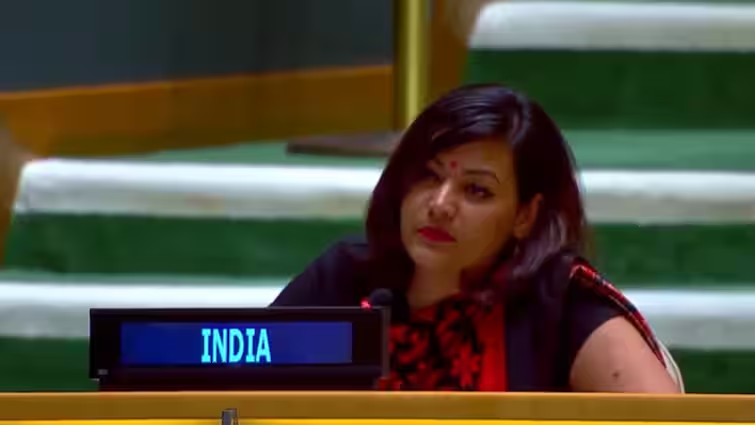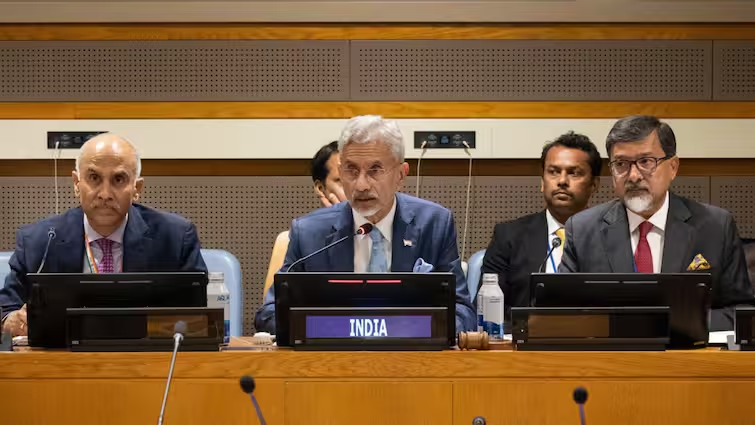
In a series of significant diplomatic engagements on the sidelines of the 78th United Nations General Assembly, External Affairs Minister Dr. S. Jaishankar underscored India’s commitment to multilateralism, institutional reform, and South-South cooperation. Chairing the BRICS Foreign Ministers’ Meeting in New York, Jaishankar emphasized the bloc’s role as a pillar of stability and constructive change in a rapidly shifting global order.
Speaking to fellow foreign ministers from Brazil, Russia, China, and South Africa, Jaishankar stated, “When multilateralism is under stress, BRICS has stood firm as a strong voice of reason and constructive change.” He further stressed that the grouping must reinforce the principles of peacebuilding, diplomacy, and international law amidst increasing global tensions. Later, on X (formerly Twitter), he added, “In a turbulent world, BRICS must reinforce the message of peacebuilding, dialogue, diplomacy and adherence to international law.”
Call for UNSC Reform Gains Momentum
A major theme in Jaishankar’s address was the urgent need to reform global institutions, particularly the United Nations Security Council (UNSC). He called on BRICS to collectively push for comprehensive reform of key UN organs to make them more representative and effective.
India has long argued that the current global governance structure is outdated and unable to respond effectively to contemporary challenges. Jaishankar reiterated India’s long-standing position that the UNSC must be expanded and restructured to include developing nations and emerging powers. This, he said, would enhance its legitimacy and capability in maintaining international peace and security.
Economic Cooperation and Trade Concerns
Jaishankar also raised pressing concerns about rising economic protectionism. Warning against tariff volatility and non-tariff barriers that are increasingly distorting trade flows, he said BRICS must take a firm stand in defending the multilateral trading system. He highlighted the importance of a rules-based order in international trade and called for deeper BRICS cooperation in technology, digital transformation, and cross-border innovation.
India, as the current BRICS Chair, is driving the bloc’s agenda toward priorities such as food and energy security, climate change mitigation, sustainable development, and digital innovation. These areas, Jaishankar emphasized, are essential for ensuring equitable growth across the Global South.
IBSA Meeting: Strengthening the South-South Axis
Later in the day, Jaishankar co-chaired the IBSA (India, Brazil, South Africa) Foreign Ministers’ Meeting. Describing it as a “great meeting” on X, he said IBSA made a “strong call for the transformative reform of the UNSC.” The meeting reflected the shared vision among the three democracies of reforming global institutions and promoting equitable development.
The ministers discussed ways to strengthen existing platforms like the IBSA Trust Fund, expand intra-IBSA trade, and deepen cooperation in maritime security and academic exchanges. IBSA, they agreed, would continue to be a reliable platform for South-South cooperation, particularly at a time when global divisions are widening.
India-CELAC Meeting: Reaching Out to Latin America
Jaishankar also co-chaired the India-CELAC (Community of Latin American and Caribbean States) Foreign Ministers’ Meeting with Colombian Foreign Minister Rosa Yolanda Villavicencio. The engagement aimed to deepen ties with Latin American and Caribbean nations and explore greater cooperation in areas such as sustainable agriculture, energy, and digital development.
The meeting underlined India’s increasing diplomatic outreach to Latin America, a region it views as a valuable partner in advancing multilateral cooperation and diversifying global supply chains.
Bilateral Meetings with Key Global Leaders
On the sidelines of the UNGA, Jaishankar held several bilateral meetings with foreign ministers from key nations, including Russia’s Sergey Lavrov, Indonesia’s Sugiono, Antigua and Barbuda’s Paul Chet Greene, Uruguay’s Mario Lubetkin, and Colombia’s Rosa Yolanda Villavicencio. These meetings focused on enhancing economic ties, security cooperation, and multilateral coordination on global issues.
Each bilateral dialogue was geared toward advancing India’s foreign policy goals of strategic autonomy, diversified partnerships, and active engagement with both the Global South and traditional allies.